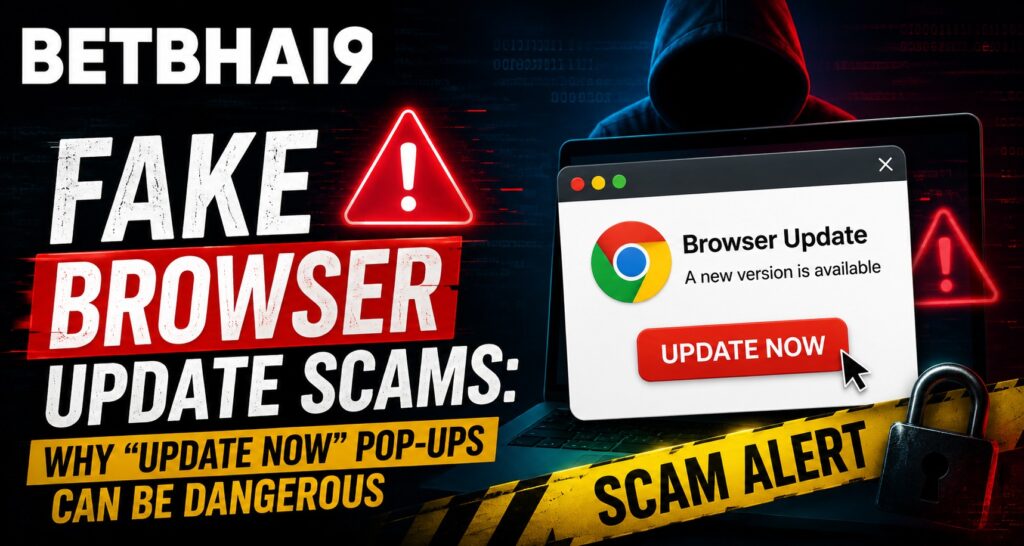
Online security threats are becoming more advanced, and fake browser update scams are one of the most common tricks used to target internet users. These scams usually appear as urgent pop-ups asking users to install a new browser version or security update. For users who regularly access digital platforms, Betbhai9 highlights the importance of staying aware of online safety practices and recognising suspicious activities before clicking unknown links.
A fake update message may look genuine, but it can secretly install harmful software, steal personal information or compromise account security. Understanding how these scams work helps users make safer decisions while browsing websites, managing accounts and downloading applications.
What Are Fake Browser Update Scams?
Fake browser update scams are fraudulent messages designed to look like official browser notifications. They often appear while visiting compromised websites, downloading files from unknown sources or clicking unsafe advertisements.
Instead of providing a real update, these pop-ups may:
- Install malware or unwanted programs.
- Collect personal details.
- Redirect users to unsafe websites.
- Track online activity.
- Attempt to steal login credentials.
Cybercriminals use professional-looking designs, official logos and urgent language to make these warnings appear trustworthy.
How Fake Update Pop-Ups Trick Users
The biggest reason these scams work is psychological pressure. Many fake notifications create fear by claiming that the browser is outdated or the device is at risk.
Common messages include:
- “Your browser needs an immediate update.”
- “Security risk detected. Update now.”
- “Your device may be infected.”
- “Install the latest version to continue.”
These messages encourage users to act quickly without checking whether the notification is genuine.
A real browser update usually comes through the browser’s official settings menu, not through random website pop-ups.
Warning Signs of a Fake Browser Update
Recognising suspicious behaviour is the first step toward better online protection. Users should be careful when they notice:
Unexpected Update Requests
If an update message appears suddenly while browsing a website, it may not be legitimate. Official browsers typically manage updates through built-in settings.
Unknown Download Files
Fake updates often ask users to download unfamiliar files. Installing these files can expose devices to security risks.
Poor Website Design or Strange URLs
Scam pages may use unusual domain names, spelling mistakes or copied designs to appear authentic.
Urgent Language and Pressure
Messages that demand immediate action are often designed to stop users from thinking carefully.
How These Scams Can Affect Online Accounts
A successful fake update attack can create several problems for users. Malware installed through these scams may monitor activity, record passwords or access saved information.
Potential risks include:
- Stolen account credentials.
- Unauthorised access attempts.
- Loss of personal data.
- Financial information exposure.
- Device performance issues.
Users managing online accounts should always verify the source before entering passwords or downloading software. Using secure access methods such as Betbhai9 Login through official channels can help reduce the risk of interacting with fake websites.
Safe Ways to Handle Browser Update Messages
Following basic security practices can prevent many online threats.
Users should:
- Update browsers only through official settings.
- Avoid clicking random update advertisements.
- Check website addresses carefully.
- Use trusted security software.
- Keep operating systems updated.
- Enable multi-factor authentication where available.
Regular security habits are more effective than reacting after an account or device has already been compromised.
Why Download Sources Matter
Many fake update scams spread through unofficial websites, third-party download pages and misleading advertisements. Users should avoid downloading applications or browser extensions from unknown sources.
Before installing any software, check:
- Developer information.
- User reviews.
- Official website details.
- Required permissions.
This approach helps users avoid applications that may contain hidden risks.
Protecting Mobile Users From Fake Updates
Mobile users are also targeted by similar scams. Fake browser update messages may appear through websites, advertisements or suspicious applications.
Mobile security tips include:
- Download apps only from trusted stores.
- Review app permissions regularly.
- Avoid unknown APK files.
- Keep security updates enabled.
- Remove suspicious applications immediately.
Users who access services through mobile platforms should ensure they are using verified applications and official links. Checking details related to Betbhai9 App before installation can Help users avoid imitation applications.
Creating Stronger Digital Security Habits
Online safety depends on daily habits. A few simple steps can significantly reduce exposure to scams.
Good practices include:
- Using unique passwords for different accounts.
- Avoiding public Wi-Fi for sensitive activities.
- Checking login pages before entering information.
- Reviewing account activity regularly.
- Keeping backup copies of important data.
Security awareness is especially important as scammers continue developing more realistic-looking fake websites and notifications.
Conclusion
Fake browser update scams are dangerous because they often appear convincing and create urgency. A simple “Update Now” button can lead users toward malware, stolen information or compromised accounts.
By verifying update sources, avoiding suspicious downloads and maintaining secure browsing habits, users can protect their devices and personal information. Staying informed about online safety is one of the most effective ways to reduce digital risks.
Users should also avoid sharing account details on unknown platforms and always confirm official access methods. Whether managing a Betbhai9 ID, reviewing online services or browsing everyday websites, careful digital behaviour remains essential.
Frequently Asked Questions (FAQs)
What is a fake browser update scam?
A fake browser update scam is a fraudulent pop-up or webpage designed to trick users into installing harmful software by pretending to offer a genuine browser update.
How can I identify a fake update notification?
Unexpected pop-ups, urgent warnings, unknown download files and suspicious website addresses are common signs of fake update messages.
Should I click “Update Now” on website pop-ups?
No. Users should avoid clicking update buttons from random websites. Browser updates should be completed through official browser settings.
Can fake updates steal passwords?
Yes. Some fake updates install malware that can monitor activity and attempt to steal passwords or personal information.
How can I safely update my browser?
Open your browser settings manually and use the official update option provided by the browser developer.
Is Betbhai9 Com safe to access?
Users should always verify official website addresses and avoid clicking suspicious links that imitate legitimate platforms.
What is Betbhai9 Club used for?
Betbhai9 Club refers to account-related features available on the platform. Users should check official sources for current details and access methods.