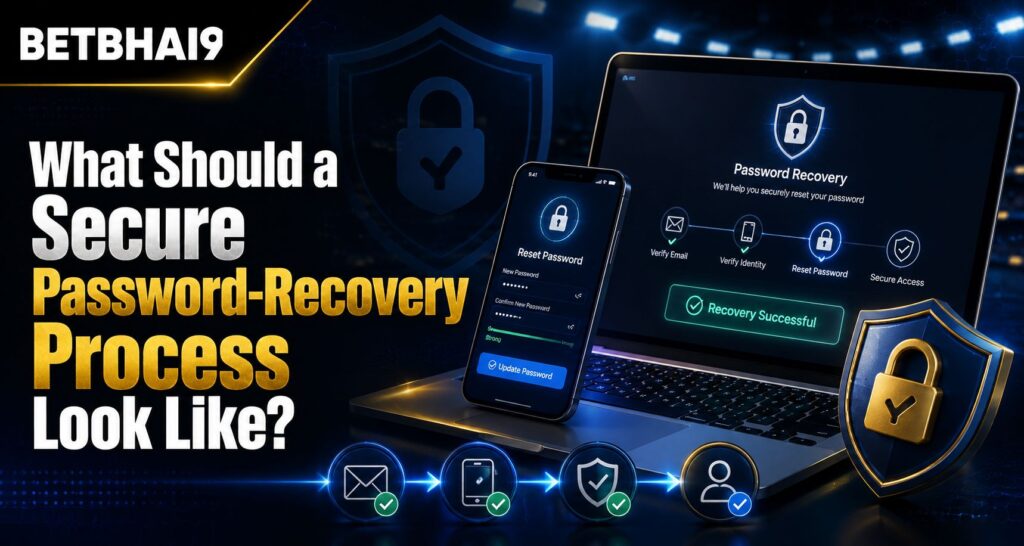
A forgotten password should never become an easy back door into an account. For users of Betbhai9, a secure recovery process should confirm account ownership without weakening normal login protection. The platform’s current FAQ says users who forget their credentials can select “Forgot Password” and use their registered email address or mobile number to reset access. A well-designed recovery system should support that simple user experience with stronger safeguards behind the scenes.
1. Start With a Privacy-Safe Recovery Request
A good recovery page should ask for a registered identifier, such as an email address, mobile number or username, without revealing whether that account actually exists.
OWASP recommends using consistent messages and similar response times for valid and invalid accounts. This helps prevent attackers from using the password-reset page to discover registered usernames or email addresses.
For someone using Betbhai9 Login, the recovery process should therefore protect account privacy while still providing clear instructions.
2. Verify Ownership Through a Trusted Channel
The next step should confirm that the person requesting access controls a recovery method already associated with the account. Betbhai9 Com currently states that forgotten credentials can be recovered using a registered email address or mobile number.
Secure recovery methods may include:
- A time-limited email link
- A one-time code sent to a verified number
- A previously saved recovery code
- Another registered authentication method
NIST recognises issued recovery codes, saved recovery codes, recovery contacts and repeated identity proofing as possible account-recovery approaches.
3. Make Reset Links and OTPs Expire
Password-reset links should not remain usable indefinitely.
OWASP recommends reset tokens that are randomly generated, securely stored, single-use and valid only for an appropriate period. NIST similarly sets validity limits for issued recovery codes and requires verification attempts to be throttled.
A Betbhai9 App user should therefore use the latest recovery message promptly and never share an OTP or reset link with another person.
4. Limit Repeated Recovery Attempts
Secure systems should restrict both repeated recovery requests and incorrect verification-code attempts.
Without rate limits, attackers could repeatedly trigger reset messages or attempt large numbers of possible codes. OWASP specifically recommends protections against excessive automated password-reset requests.
Useful controls include:
- Reset-request throttling
- OTP attempt limits
- Temporary cooldown periods
- Monitoring unusual recovery activity
- Additional verification for suspicious requests
When recovering a Betbhai9 ID, repeatedly requesting new codes should not make the process easier or less secure.
5. Let Users Choose a Strong New Password
After ownership has been verified, the user should create a replacement password rather than receive a permanent password through email, SMS or chat.
NIST says services should reject commonly used, predictable or compromised passwords. It also recommends allowing password managers, autofill and paste functionality because these tools can make strong, unique passwords easier to use.
For Betbhai9 Club members or other account holders, the new password should be unique and should not be reused for email, banking or other important accounts.
6. Return Users to the Normal Login Process
Password recovery should not silently bypass the normal authentication system.
OWASP recommends that after successfully changing a password, users should sign in through the regular authentication process rather than being automatically logged into the account.
For Betbhai9 Login users, this creates a clear separation between resetting credentials and starting an authenticated session.
If additional verification normally protects the account, recovery should not simply remove that protection.
7. Notify Users After Account Recovery
A password reset is an important security event.
NIST states that account-recovery events should generate notifications so account owners have an opportunity to identify fraudulent recovery activity.
For a Betbhai9 ID holder, an unexpected password-reset notification should be treated seriously. Instead of following an unfamiliar link, visit the recognised service independently and contact authorised support if necessary.
8. Give Users Control Over Existing Sessions
Changing a password does not always mean every previously authenticated session has automatically ended.
OWASP recommends allowing users to invalidate existing sessions after completing a password reset. This can be especially important when the password was changed because unauthorised account access was suspected.
A Betbhai9 App user should review active sessions or sign out other devices when such controls are available.
What Should Never Be Shared During Recovery?
A legitimate recovery process should not require users to give sensitive credentials to unknown individuals.
Never share:
- Your current or new password
- OTP codes with third parties
- Password-reset links
- Password-manager master passwords
- Unnecessary financial credentials
Betbhai9 Com users should begin recovery from the recognised website or app and rely on authorised support if the standard process fails.
Conclusion
A secure password-recovery process should balance convenience with careful identity verification. The strongest approach combines neutral account responses, trusted recovery channels, expiring single-use codes, rate limits, strong password checks and security notifications.
For Betbhai9 users, recovery may begin with a registered email address or mobile number, but every step should be designed to prevent account takeover. Betbhai9 Club users should treat OTPs and reset links with the same care as their normal passwords.
FAQs
What is the safest way to reset a forgotten password?
Start from the recognised login page and complete recovery through a previously registered email, mobile number or other verified method.
Should password-reset links expire?
Yes. Secure reset links should be time-limited and single-use so an old or stolen link cannot remain useful indefinitely.
Is an OTP enough for password recovery?
An OTP can form part of the process, although higher-risk accounts may require additional verification depending on the required security level.
Should a new password be emailed to the user?
A safer approach is to let the verified account owner create a new password rather than sending a permanent password in plain text.
What if I receive a password-reset alert I did not request?
Avoid using unexpected links. Visit the recognised service directly and contact authorised support if you suspect an unauthorised recovery attempt.